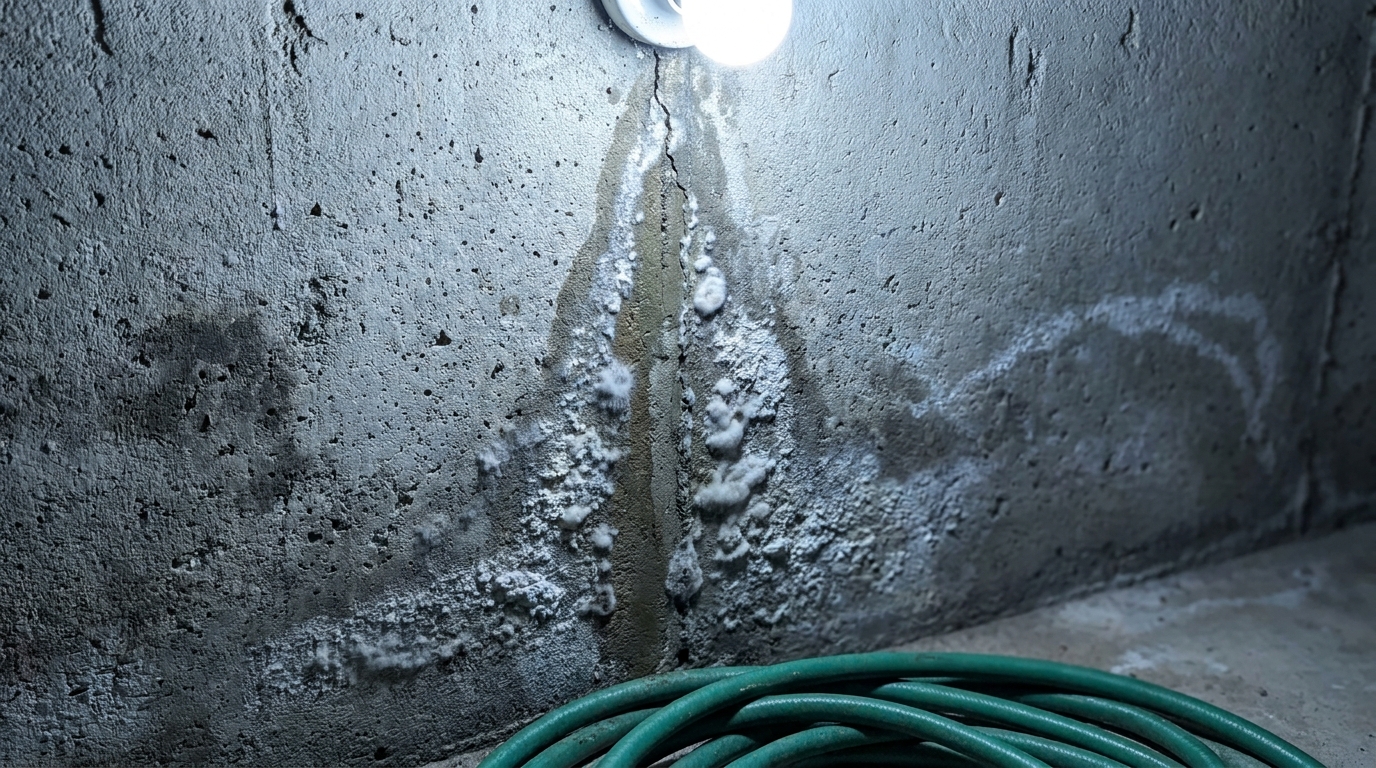
Few things deflate the excitement of buying a home faster than discovering mold behind a bathroom vanity or along a basement wall. If you just bought a house and found mold, the situation can feel overwhelming, especially when you are already stretched thin from closing costs, moving expenses, and the mental load of a major life change. The good news: most residential mold problems are fixable. The key is understanding what you are dealing with, who may be responsible, and which steps to take first.
This guide walks through the practical, financial, and legal realities of finding mold in a newly purchased home so you can move from panic to a clear plan of action.
What Does It Mean When You Find Mold in a House You Just Bought?
Finding mold means there is, or recently was, a moisture problem somewhere in the home. It does not automatically mean the house is condemned or that you made a terrible purchase.
Mold is far more common than many buyers realize. A nationwide study of over 1,000 U.S. homes found that 100% had detectable mold levels, and 25% had elevated moldiness scores associated with higher asthma risk in children, according to EPA-supported ERMI research. Separately, HUD’s American Housing Survey shows that roughly 15% of occupied homes had signs of exterior water leaks and 11% had interior leaks in the previous 12 months.
The real question is not “is there mold?” but rather: how extensive is it, what caused it, and is the moisture source still active? According to the U.S. EPA, “The key to mold control is moisture control.” A small patch of mold on bathroom caulk tells a very different story than widespread growth behind drywall fed by a chronic roof leak.
There is also no federal “safe level” of indoor mold. The EPA confirms that no threshold limit values for airborne mold concentrations have been set by any federal agency. That means finding mold triggers a practical duty to correct the problem, not a legal declaration that the home is uninhabitable.
What Causes Mold to Grow in Homes?
Mold grows whenever mold spores land on a damp surface with organic material to feed on. Spores are always present in indoor and outdoor air, so moisture is the controlling factor.
According to the EPA, mold may begin growing on wet surfaces within 24 to 48 hours. That timeline matters. A pipe that burst last week, a toilet that overflowed during the move, or a roof leak during a recent storm can all produce visible mold in just a couple of days.
The New York State Department of Health lists common indoor moisture sources that lead to mold: roof leaks, plumbing leaks, damp basements and crawlspaces, steam from bathrooms and kitchens, condensation on cool surfaces, and dryers vented indoors. Understanding what mold needs to grow helps new homeowners pinpoint the root cause quickly.
One important misconception: mold is a moisture problem, not a cleanliness problem. The New York State Department of Health notes that “mold spores are everywhere, including your home.” A spotless kitchen can still grow mold under the sink if a supply line drips unnoticed for a week.
For prevention, the EPA and WebMD (summarizing public health guidance) recommend keeping indoor relative humidity between 30% and 50%, and never above 60%.
Where Should You Look? Common Places Mold Hides in Newly Purchased Homes
Mold often grows in areas that are hard to see during a standard walkthrough or even a home inspection. Knowing where to check for mold can help you assess the scope of the problem fast.
According to the EPA, mold can grow on virtually any surface where moisture is present, including wood, paper, carpet, insulation, and drywall. Here are the locations to prioritize:
Basements and crawlspaces. A Canadian field study of over 1,000 dwellings found visible mold most frequently in basements (43% of homes with visible mold) and bathrooms (39%), according to research published in Indoor Air. Check along foundation walls for discoloration, around sump pumps, and behind stored boxes that block airflow.
Bathrooms. Look behind vanities, around toilet bases (where wax ring leaks occur), inside tile grout, and on ceilings above showers. Peeling paint or bubbling drywall overhead often signals condensation or a leak from above.
Kitchens and laundry rooms. Inspect under sinks, behind dishwashers, around refrigerator water lines, and behind washing machines. Swollen particleboard at the base of cabinets is a telltale sign.
Attics. The EPA warns that HVAC components and ductwork can distribute mold spores throughout a home. Bathroom exhaust fans vented into the attic instead of outdoors are a frequent culprit for attic mold.
Inside walls. Black mold inside walls can go undetected for months or years. Water stains, warped baseboards, or a persistent musty smell near a wall are reasons to investigate further, potentially with the help of a mold inspector.
If you suspect hidden mold but cannot find a visible source, a musty odor alone is enough reason to call a professional.
What Are the Health Risks of Mold Exposure?
Mold exposure is linked to respiratory symptoms, allergic reactions, and worsened asthma, though the severity depends on the individual and the extent of exposure.
The Institute of Medicine concluded in 2004 that there is sufficient evidence linking indoor dampness and mold with upper respiratory symptoms, cough, wheeze, and asthma symptoms in sensitized people, according to a CDC summary of the IOM report. An EPA-supported analysis estimated that approximately 4.6 million U.S. asthma cases are attributable to dampness and mold exposure in homes, as reported by RealTime Labs.
According to the CDC, common symptoms of mold exposure include stuffy nose, sore throat, coughing, wheezing, burning eyes, and skin rash. People with asthma or chronic lung disease face more serious risks, and immunocompromised individuals can develop fungal lung infections.
Some molds produce mycotoxins, but the CDC emphasizes that “you do not need to know the type of mold” to take action. The color of mold tells you nothing definitive about its toxicity. Many species appear dark or black, and not every dark mold is Stachybotrys chartarum (often called “black mold”). The priority is always to remove the mold and fix the moisture source, regardless of species.
Anyone experiencing persistent respiratory symptoms after moving into a new home should consult a physician, particularly if symptoms improve when away from the house.
Is the Seller Responsible for Mold You Found After Closing?
The seller is generally only liable if they knew about the mold and failed to disclose it or actively concealed it. Once closing documents are signed, the buyer typically assumes responsibility for the home’s condition.
According to Redfin, the seller is liable after closing only if they “failed to disclose a known issue or agreed to fix something post-closing.” Most states require disclosure of known material defects, including water intrusion and conditions that favor mold. However, Redfin also notes that “sellers aren’t legally required to conduct mold testing unless they have specific reasons to suspect a problem.”
State mold laws vary significantly. In Florida, the landmark Johnson v. Davis case requires sellers to disclose “any known facts that materially affect the value of the property and that are not readily observable,” as explained by T. Gaines Law. In Illinois, while “mold” is not explicitly named in disclosure statutes, recurring leaks and plumbing defects must be disclosed, and intentional concealment can support a fraud claim, according to ServiceMaster by Zaba.
If you suspect the seller knew about the mold, document everything: photographs, dates, repair estimates, and any evidence of cover-up (fresh paint over stained drywall, for example). Then consult a real estate attorney in your state. Statutes of limitations for these claims typically range from two to four years, though some states allow longer periods for latent construction defects.
How Do You Know How Bad the Mold Problem Is?
The severity depends on how much material is affected, whether the moisture source is still active, and whether porous building materials have been damaged.
According to CDC/NIOSH, there are no health-based standards for acceptable indoor mold levels, so there is no simple “pass or fail” number. Visual inspection and musty odors are more reliable indicators than air sampling in many situations. A single air test can miss problems because spore counts fluctuate with weather, ventilation, and time of day.
Here is a general framework for gauging severity:
| Indicator | Likely Severity | Suggested Action |
|---|---|---|
| Small spot on tile or caulk (under 10 sq ft), no musty odor | Minor | DIY cleanup with soap and water; fix moisture source |
| Mold on drywall, carpet, or insulation in one area | Moderate | Professional assessment recommended; material may need removal |
| Mold in multiple rooms, inside walls, or in HVAC | Significant | Professional remediation with containment; investigate structural damage |
| Widespread mold after flooding or long-term leak | Severe | Full professional remediation; possible structural repair; consider temporary relocation |
The Minnesota Department of Health recommends keeping indoor relative humidity at 20 to 40% in winter and under 60% the rest of the year. If your humidity readings consistently exceed those targets, the mold problem is likely to worsen without intervention.
For a thorough evaluation, consider hiring a certified mold inspector. Learn more in our guide on what to do after a mold inspection.
How Much Will Mold Remediation Cost?
Professional mold remediation costs typically range from $1,500 to $6,000 for moderate contamination, with severe cases exceeding $15,000.
According to Angi, the national average is around $2,364, with most homeowners paying between $1,223 and $3,749. Rates generally fall between $10 and $25 per square foot. HomeGuide reports that whole-house remediation after a flood or major water event can run $15,000 to $30,000.
| Location | Typical Cost Range | Notes |
|---|---|---|
| Bathroom (small area) | $500 - $1,500 | Often accessible; limited demolition |
| Attic | $1,500 - $6,000 | May require insulation replacement |
| Basement | $1,500 - $6,000 | Can approach $15,000 if entire basement is affected |
| HVAC system | $3,000 - $10,000 | Specialized duct cleaning required |
| Whole house (severe) | $15,000 - $30,000+ | Structural repair often needed |
Sources: Angi, HomeGuide, ATI Restoration
A professional mold inspection before remediation typically costs $200 to $600, according to ATI Restoration. That upfront investment can prevent paying for unnecessary work or missing hidden contamination that leads to a second round of remediation.
Can Homeowners Insurance Help Cover Mold Removal?
Standard homeowners policies usually exclude mold unless it resulted from a sudden, accidental covered event like a burst pipe or storm damage.
According to the Texas Department of Insurance, most policies cover sudden and accidental water damage and will cover mold on those damaged items, but “usually won’t cover damage from gradual leaks.” Mold from flooding is also excluded unless you carry a separate flood policy.
Even when mold is covered, limits tend to be low. Insurance.com reports that most carriers set basic mold coverage limits around $2,500 to $5,000, with higher limits available only through paid endorsements. United Policyholders notes that some carriers, like Nationwide, cap mold damage coverage at $10,000 with no option to increase.
Timing matters too. Progressive states that if mold “has been around for weeks or longer” or resulted from neglect, the claim is likely denied. For a deeper look at coverage scenarios, see our guide on whether homeowners insurance covers mold.
If you discover mold shortly after closing, document the timeline carefully. Pre-existing mold from a slow leak is typically treated as a seller disclosure issue, not an insurance claim.
How to Prevent Mold From Coming Back After Remediation
Preventing recurrence requires eliminating the moisture source and maintaining conditions that discourage mold growth long-term.
The EPA recommends keeping indoor relative humidity between 30% and 60%, venting bathrooms and dryers to the outside, and fixing leaks promptly. According to Mold & Bacteria Consulting Labs, “Remediation does not eliminate spores in the remediated areas and even if it did, new spores would infiltrate indoors from the outside.” The goal is controlling conditions, not achieving a spore-free environment.
Practical steps for new homeowners after remediation:
- Buy a hygrometer. Place one in the basement and one in the main living area. Aim for 30% to 50% relative humidity.
- Run exhaust fans. Use bathroom fans during showers and for at least 20 to 30 minutes afterward. Make sure they vent outdoors, not into the attic.
- Inspect regularly. Check under sinks, around toilets, in the attic near roof penetrations, and along basement walls every few months.
- Improve drainage. Ensure gutters are clear and grading slopes water away from the foundation.
- Avoid storing porous materials in damp areas. Cardboard boxes on a basement floor are an invitation for mold. Use plastic bins and keep items off the ground.
The EPA also warns that absorbent materials like carpet, ceiling tiles, and insulation may need to be discarded if they cannot be thoroughly dried within 24 to 48 hours.
When Should You Call a Professional?
Call a professional when the mold covers more than about 10 square feet, affects porous building materials, or involves HVAC systems or hidden cavities.
The EPA uses 10 square feet (roughly 3 feet by 3 feet) as the threshold between a manageable DIY cleanup and a job that warrants professional containment and equipment. The NYC Department of Health mold guidelines similarly recommend professional procedures for contamination exceeding 10 square feet.
Other situations that call for professional help:
- Mold on drywall, insulation, or subfloor. These porous materials often need removal, not just surface cleaning.
- Persistent musty smell with no visible source. This suggests hidden growth inside walls, under flooring, or in ductwork.
- Mold that returns after cleaning. Recurrence means the moisture source has not been resolved.
- Vulnerable household members. The CDC warns that people with asthma, COPD, severe allergies, or weakened immune systems face heightened risk from mold exposure.
- HVAC contamination. The EPA advises against running a system with suspected mold until it has been inspected and cleaned by a specialist.
When hiring a remediation company, look for IICRC S520 certification and ask for references. Get at least two quotes. The person who inspects should ideally be independent from the company performing the remediation to avoid conflicts of interest.
Ready to connect with a qualified mold professional in your area? Visit our contractor directory to find local mold inspectors and remediation companies that can help you take the next step.