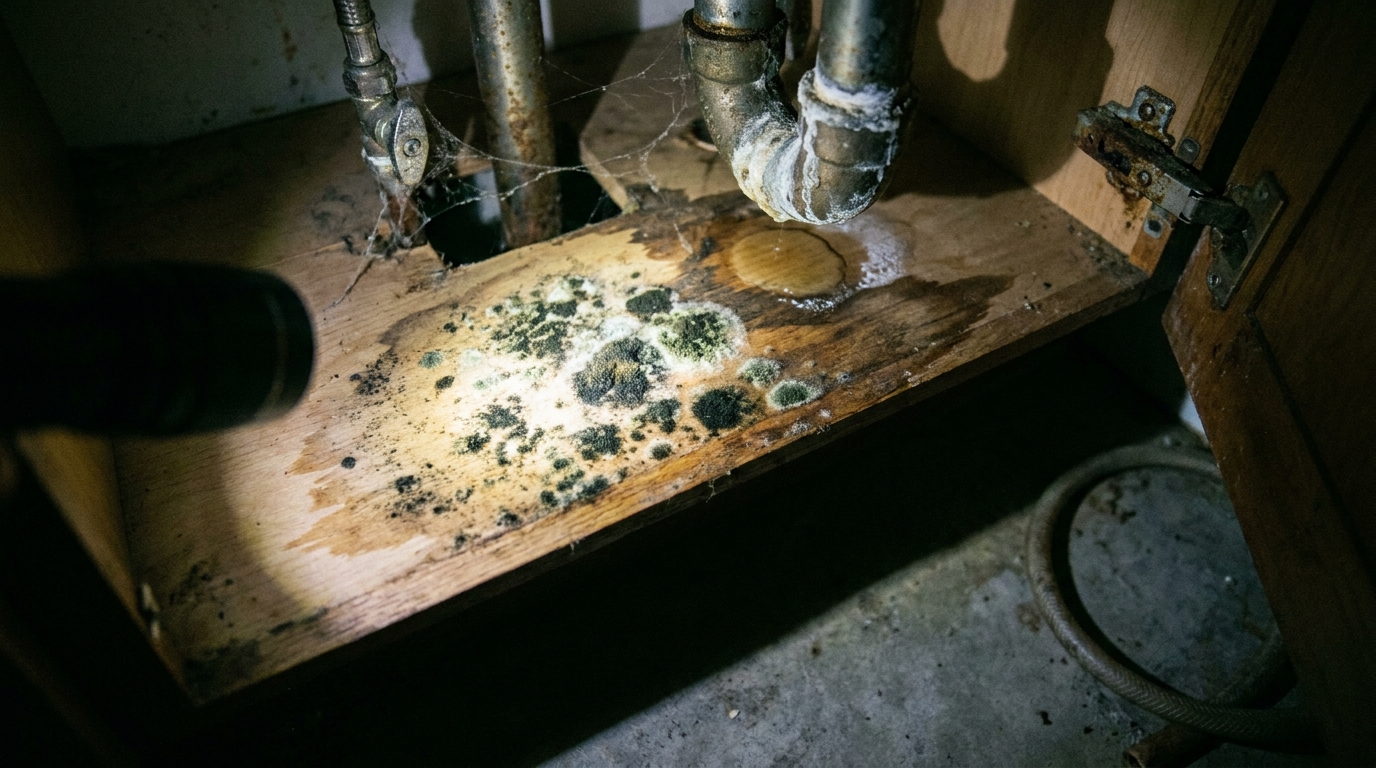
Finding mold in your home can trigger a wave of questions, and the biggest one is usually simple: how bad is mold in my house, really? The answer depends on several measurable factors, including the size of the affected area, the type of materials involved, how long moisture has been present, and who lives in the household. This guide walks through a practical severity framework so homeowners can assess their specific situation, understand actual health risks, and decide whether a problem calls for a weekend cleanup or a professional remediation crew.
What Is Household Mold and Why Does It Matter?
Mold is a type of fungus that breaks down organic material and reproduces by releasing microscopic mold spores into the air. Those spores are everywhere, indoors and outdoors, year-round.
The presence of a few spores is normal. The problem starts when spores land on damp surfaces and begin actively growing. According to the CDC, mold can grow on almost any organic material when enough moisture is present, making indoor mold fundamentally a moisture problem. Drywall paper, wood framing, carpet backing, ceiling tiles, and even household dust provide plenty of food for mold colonies.
Why should homeowners care? A study of more than 40,000 U.S. children found asthma in almost 11% of those exposed to mold at home, compared with 7% of children without mold exposure, according to Harvard Health Publishing. That gap matters. Mold also damages building materials, reduces property value, and can create persistent odors that are difficult to eliminate without addressing the source.
What Causes Mold to Grow in a Home?
Moisture is the single factor that determines whether mold grows indoors. Spores, organic food sources, and suitable temperatures already exist in virtually every home. Remove the moisture, and mold cannot colonize.
According to the EPA, wet materials must be dried within 24 to 48 hours to prevent mold growth. That timeline is tight. A slow plumbing leak behind a vanity, a roof drip that only appears during heavy rain, or condensation forming on cold basement walls can all provide enough sustained dampness for colonies to establish.
Common moisture sources include:
- Plumbing and roof leaks (even small, intermittent ones)
- High relative humidity above 50 to 60%
- Poor ventilation in bathrooms, kitchens, and laundry areas
- Flooding or storm damage that was not dried promptly
- Condensation on windows, pipes, or exterior walls
The University of Minnesota Extension notes that homes with more occupants tend to have higher indoor moisture levels simply from breathing, showering, and cooking. Understanding what mold needs to grow helps homeowners target prevention at the right variable: water.
How Do You Know How Bad the Mold Is? (Severity Scale Explained)
Severity depends on the size of the contaminated area, the materials affected, and whether the moisture source is ongoing. There is no government-issued “mold danger scale,” but remediation professionals commonly use area-based categories adapted from New York City Department of Health guidelines and the IICRC S520 standard.
According to the CDC and NIOSH, there are no federally established safe or dangerous mold spore counts. Any visible mold growth indoors signals a moisture problem that should be addressed. That said, the practical severity framework below helps homeowners gauge how urgent their situation is.
| Severity Level | Approximate Area | Typical Examples | Recommended Response |
|---|---|---|---|
| Minor | Under 10 sq ft | Small bathroom grout patch, window sill spot | DIY cleanup with detergent, gloves, N-95 mask; fix moisture source |
| Moderate | 10 to 30 sq ft | Section of drywall mold, closet wall, under-sink cabinet | Professional assessment recommended; containment may be needed |
| Significant | 30 to 100 sq ft | Large wall section, carpet area, basement wall | Professional remediation with containment and HEPA filtration |
| Extensive | Over 100 sq ft | Multiple rooms, structural framing, post-flood damage | Full professional remediation; temporary relocation often advised |
| HVAC Involved | Any size | Mold inside ductwork or air handler | Professional remediation required regardless of visible area |
According to the EPA, homeowners can generally handle mold areas smaller than about 10 square feet themselves. Larger areas, or situations involving water damage and porous materials, typically call for trained professionals.
One important note: even a small visible patch can indicate a larger hidden problem. A 2-square-foot spot on drywall may be the visible edge of extensive growth behind the wall. When in doubt, a mold inspection can reveal what lies beneath the surface.
What Are the Signs Your Mold Problem Is Serious?
Several warning signs suggest a mold situation has moved beyond a minor nuisance. Watch for these red flags.
Multiple household members have persistent symptoms. When more than one person experiences ongoing coughing, nasal congestion, eye irritation, or headaches that improve away from home, the indoor environment is likely contributing. According to the NIEHS, extended mold exposure is associated with worsening asthma and increased risk of developing asthma, particularly in children.
Visible growth covers a large area or appears in multiple rooms. Growth spanning more than 10 square feet, or patches appearing in several locations, suggests a systemic moisture issue rather than an isolated incident.
A persistent musty odor lingers even after cleaning. The CDC advises that if you see or smell mold, you should remove it. Persistent musty odors often point to hidden mold inside wall cavities, under flooring, or within HVAC systems.
Porous materials are affected. Mold growing on or into carpet, insulation, ceiling tiles, or drywall is harder to remediate than surface mold on tile or glass. The EPA notes that porous materials with significant mold growth often need to be discarded rather than cleaned.
The moisture source has not been fixed. Active leaks, chronic condensation, or indoor humidity consistently above 50% guarantee that mold will continue spreading. According to the CDC, keeping indoor humidity no higher than 50% all day long is essential for mold prevention.
How Bad Is Mold for Your Health?
For most healthy adults, small-scale mold exposure causes mild or no symptoms. Risk increases with the extent of contamination, duration of exposure, and individual vulnerability.
The Institute of Medicine concluded in 2004 that sufficient evidence links indoor dampness and mold with upper respiratory symptoms, cough, and wheeze in otherwise healthy people, as well as asthma symptoms in those who already have asthma. The CDC summarizes these findings and notes that serious mold infections are relatively rare, occurring mainly in people with severely weakened immune systems.
According to the EPA, molds produce allergens, irritants, and in some cases mycotoxins. Allergic reactions are the most common health effect and can be immediate or delayed. Some people experience eye, skin, nose, throat, and lung irritation even without a diagnosed mold allergy.
A few statistics put the risk in perspective:
- An estimated 4.6 million of 21.8 million U.S. asthma cases (roughly 21%) are attributable to dampness and mold in homes, according to an EPA and Lawrence Berkeley National Laboratory analysis cited by RealTime Labs.
- Infants heavily exposed to mold in their first year of life had nearly three times the risk of developing asthma later, based on research summarized by the same source.
- A WHO review found that people living in damp, moldy buildings had 30 to 50% higher odds of respiratory symptoms compared with those in dry buildings.
The New York State Department of Health notes that allergy and irritation are the most common symptoms, while serious infections are relatively rare and occur mainly in people with severely suppressed immune systems. Anyone experiencing persistent respiratory symptoms should consult a physician, and individuals with asthma or immune conditions should take even minor mold growth seriously.
Color alone does not determine danger. The idea that only black mold is harmful is a persistent myth. The EPA and CDC both stress that any visible mold, regardless of color, should be removed and the moisture problem corrected.
Can You Stay in the House While Mold Is Present?
For small, contained mold problems on hard surfaces, most healthy occupants can remain in the home while cleanup occurs. Larger contamination or vulnerable household members change the equation.
The EPA indicates that homeowners can usually clean mold areas under about 10 square feet themselves with proper precautions. In these cases, staying in the home is generally considered acceptable as long as the affected area is isolated and promptly addressed.
Temporary relocation becomes more appropriate when:
- Mold affects multiple rooms or an area larger than 30 square feet
- Professional remediation involves containment barriers and negative air pressure
- Mold is present in the HVAC system, which can distribute spores throughout the home
- Anyone in the household has asthma, chronic lung disease, or a weakened immune system
The CDC recommends that people with asthma, mold allergies, or compromised immune systems avoid moldy environments entirely. For a deeper look at occupancy decisions during active contamination, see our guide on whether you can stay in a house with black mold.
There is no federally defined “safe” indoor mold level. The EPA explicitly states that no federal standards exist for airborne mold concentrations in homes. The practical guideline from every major health agency is the same: if you can see or smell mold, address it promptly.
How Do You Stop Mold From Getting Worse?
The single most effective action is eliminating the moisture source. Every other step is secondary.
Fix leaks immediately. The EPA states plainly: “The key to mold control is moisture control.” Repair roof leaks, plumbing drips, and foundation seepage as soon as they are discovered. If materials stay wet longer than 24 to 48 hours, mold growth becomes likely.
Lower indoor humidity. The CDC recommends keeping indoor humidity no higher than 50% all day long. A basic hygrometer (available for under $15) can track levels. Use air conditioning, dehumidifiers, or both to stay within the 30 to 50% range.
Improve ventilation. Run bathroom exhaust fans during showers and for at least 30 minutes afterward, according to Consumer Reports. Make sure exhaust fans vent outdoors, not into the attic. Open windows when weather permits and ensure dryers vent to the exterior.
Clean affected hard surfaces. The CDC recommends cleaning mold from hard surfaces with household products, soap and water, or a bleach solution of no more than 1 cup of household laundry bleach in 1 gallon of water. Dry the area completely afterward.
Remove contaminated porous materials. Carpet, ceiling tiles, insulation, and drywall that have been colonized by mold often cannot be fully cleaned. The EPA advises discarding and replacing these materials when mold has penetrated them.
Do not paint or caulk over mold. Covering active growth traps moisture and allows colonies to continue spreading beneath the surface. Clean and dry first, then repair.
When Should You Call a Professional?
Homeowners should contact a qualified mold inspector or remediation professional when the situation exceeds what safe DIY cleanup can handle.
Call a professional when:
- The affected area exceeds 10 square feet. This threshold comes directly from EPA guidance and is widely used across the remediation industry.
- Mold is inside walls, under flooring, or in the HVAC system. Hidden contamination requires specialized equipment to locate and remove safely.
- There has been flooding or major water damage. Post-flood environments often harbor mold in structural cavities that are invisible from the surface.
- Mold keeps returning after cleaning. Recurring growth in the same spot signals an unresolved moisture source that needs professional diagnosis.
- Household members have health symptoms. Persistent respiratory issues, especially in children or anyone with asthma, warrant professional assessment of the indoor environment.
According to Angi, professional mold remediation typically costs between $1,100 and $3,300, while inspections generally run $300 to $900 depending on home size. For a detailed breakdown, see our mold remediation cost guide. Homeowners should also check whether their policy provides coverage by reviewing whether homeowners insurance covers mold.
When hiring a professional, look for certifications from organizations like the IICRC (Institute of Inspection, Cleaning and Restoration Certification) or the ACAC (American Council for Accredited Certification). A qualified inspector should assess moisture sources, not just visible mold, and provide a written scope of work before remediation begins.
Disclaimer: This article is for informational purposes only and does not constitute medical advice. If you are experiencing health symptoms you believe may be related to mold exposure, consult a licensed physician. Mold assessment and remediation decisions should involve qualified professionals, particularly for contamination exceeding 10 square feet or affecting vulnerable individuals. MoldGuide may receive referral compensation from service providers listed on this site, but editorial content is independent of those relationships.
Ready to find a qualified mold professional in your area? Visit our contractor directory to connect with certified mold inspectors and remediation specialists near you.